1. Introduction
Few things frustrate swimmers more than foggy goggles. Condensation on the lens obscures vision, disrupts lap counting, and can even be a safety hazard in open water. Traditional solutions—spitting in the lens or smearing on defogging drops—are messy and short-lived. Nano anti-fog technology has emerged as a modern, durable answer to this age-old problem, and it is now built into many premium swim goggles on the market.
2. What Is Nano Anti-Fog?
Nano anti-fog refers to a nanometer-scale functional coating applied to the inner surface of goggle lenses. A nanometer is one-billionth of a meter, so at this scale the coating interacts with water molecules at the molecular level without adding visible thickness or affecting optical clarity.
Unlike simple chemical films that merely repel water for a few hours, nano anti-fog coatings are designed to be:
- Hydrophilic (water-attracting) rather than hydrophobic — they don’t block water; they actively manage it.
- Long-lasting — the coating is chemically bonded or cured to the lens surface, often retaining effectiveness for the usable life of the goggles (typically six months to two years).
- Clear and invisible — because the layer is only tens of nanometers thick, it has no effect on light transmission or visual distortion.
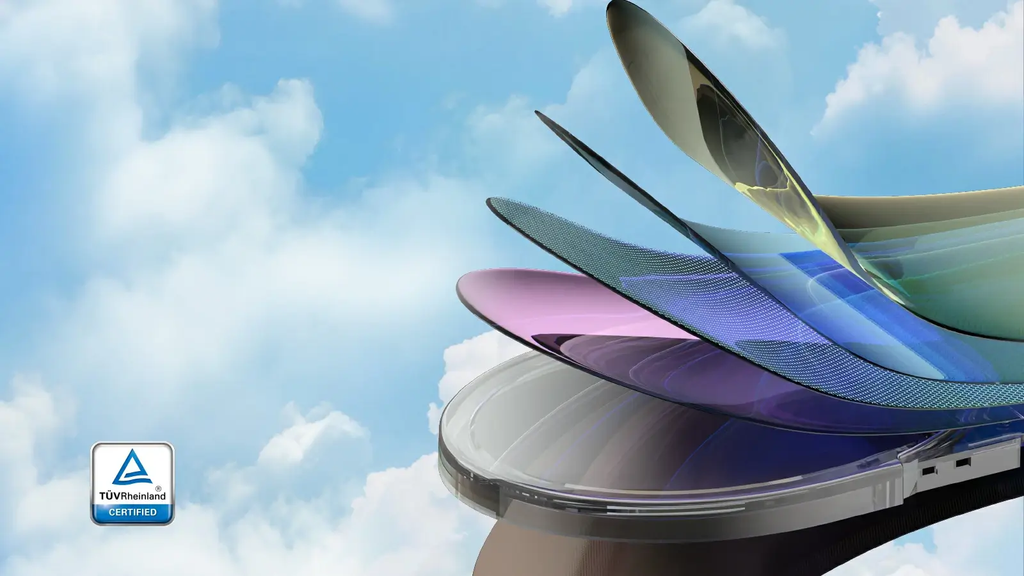
The coating remained clear after 10,000 wipes in TÜV testing. This number refers to a controlled durability test. It does not mean the goggles will remain fog-free for 10,000 swimming sessions.
Real use is messier than a laboratory test. Pool chemicals, salt, sunscreen and the way a swimmer handles the lenses all make a difference. The inner surface should still be wetted before swimming, rinsed with fresh water afterward and left to air-dry.
3. How Does It Work? The Principle
Fogging occurs when warm, humid air inside the goggles meets the cooler lens surface. Water vapor condenses into countless tiny droplets, which scatter light in all directions and create the opaque white haze we call fog.
Nano anti-fog coatings attack this problem through surface wettability engineering. The coating modifies the lens surface in one of two ways:
- Hydrophilic spreading: The coating dramatically increases the surface’s affinity for water. Instead of beading up into light-scattering droplets, condensed moisture spreads out into an extremely thin, uniform water film (a few nanometers thick) across the lens. This transparent film refracts light evenly, so vision stays crystal clear even when condensation occurs.
- Capillary channel structure (on advanced coatings): Some nano coatings form micro- or nano-scale grooves that act like capillary channels, actively drawing condensed water away from the line of sight and redistributing it along the edges of the lens.
In short, while an untreated lens turns water vapor into fog, a nano-coated lens turns it into an invisible, vision-friendly water film.
4. Key Functions and Benefits
- Fog-free vision throughout your session — no need to stop mid-swim to rinse your goggles.
- Optical clarity — the coating is invisible to the eye and does not distort underwater vision.
- Durability — the anti-fog function survives repeated use far better than normally coatings.
- Hygienic and low-maintenance — no need to touch the lens surface or apply defogging agents with your fingers, reducing bacterial transfer.